
Proportion before decoration
If the dimensions of a room are wrong, no material will rescue it. We resolve the volume first, and only then consider what covers it.
The Studio
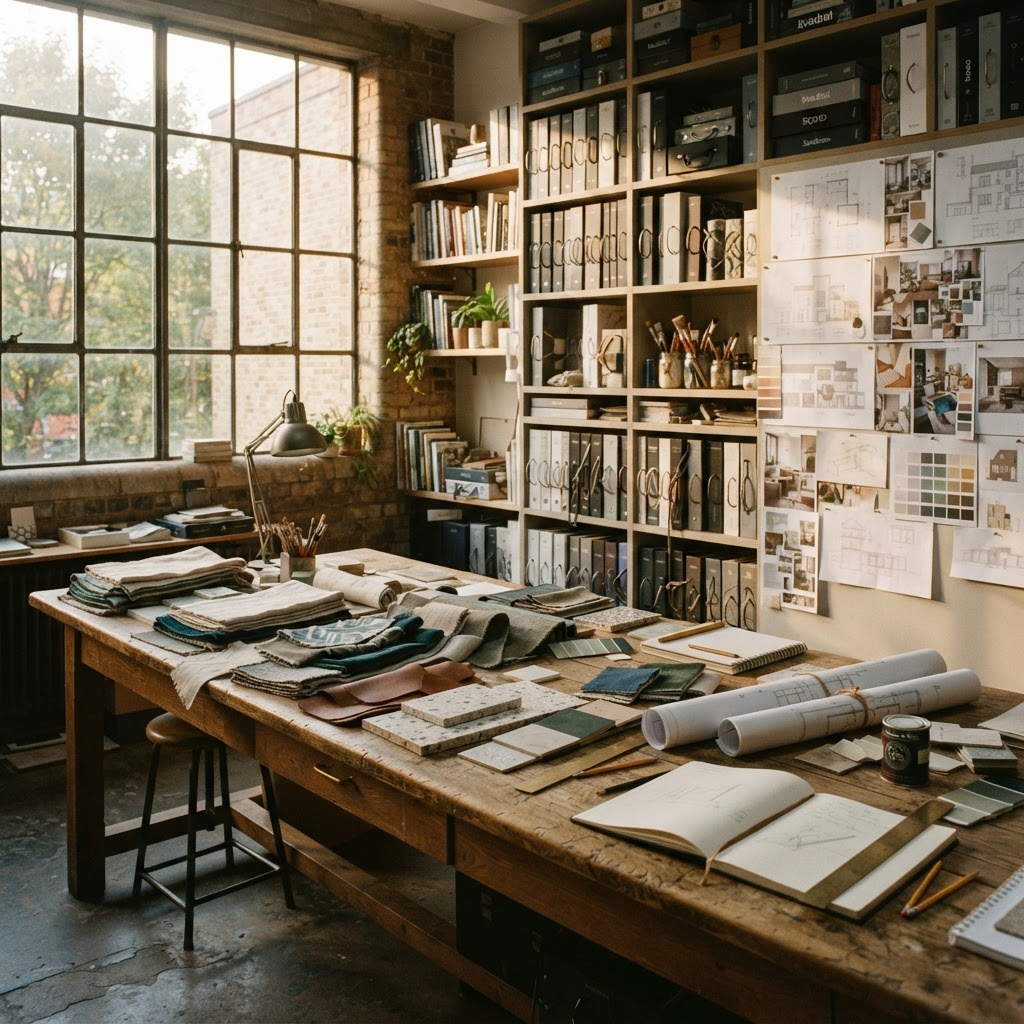
We are a practice of eighteen people and a network of ninety-one artisans, held together by a single conviction — that a room is worth getting right.
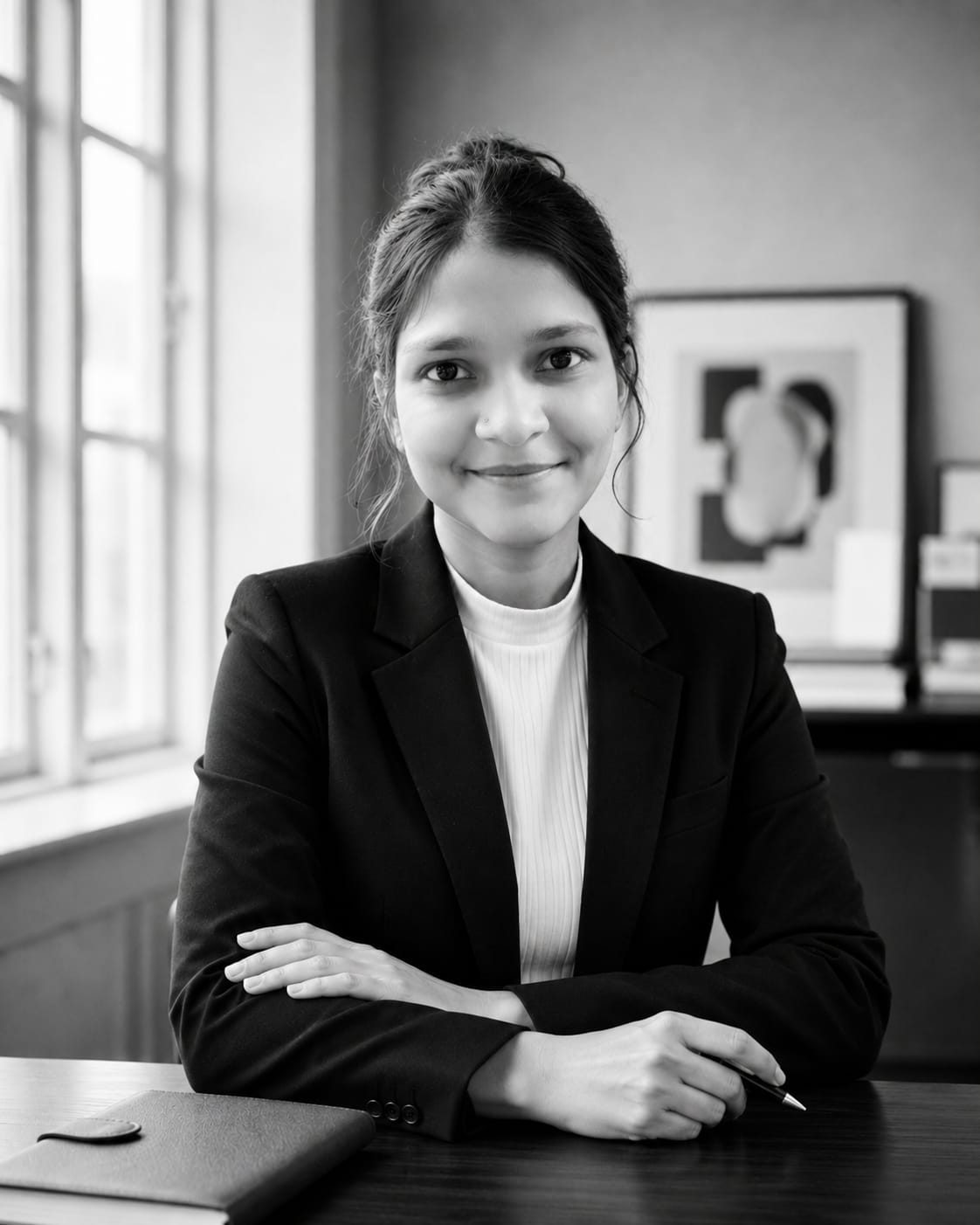
I set out to finish one flat in Bloomsbury properly. I had left a conservation practice in Delhi because I could not bear another meeting in which the answer to a difficult detail was to cover it. The flat took fourteen months. It should have taken five.
What I learned in those fourteen months is the whole of our method. That the building tells you what it wants if you survey it slowly enough. That the most expensive decision is the one taken early and reversed late. That a client who is shown the truth will almost always choose it.
Eighteen years and eighty-six houses later, we still work the same way. We still draw the principal plans by hand. We still visit the workshop before we sign off a prototype. We are slower than our competitors and we make no apology for it, because the houses outlive the schedule.
If you are reading this because you are considering a commission, know that we will ask you difficult questions before we show you a single image. It is the most useful thing we can do for you.
Sanjana Tyagi — Founder & Creative Director
If the dimensions of a room are wrong, no material will rescue it. We resolve the volume first, and only then consider what covers it.
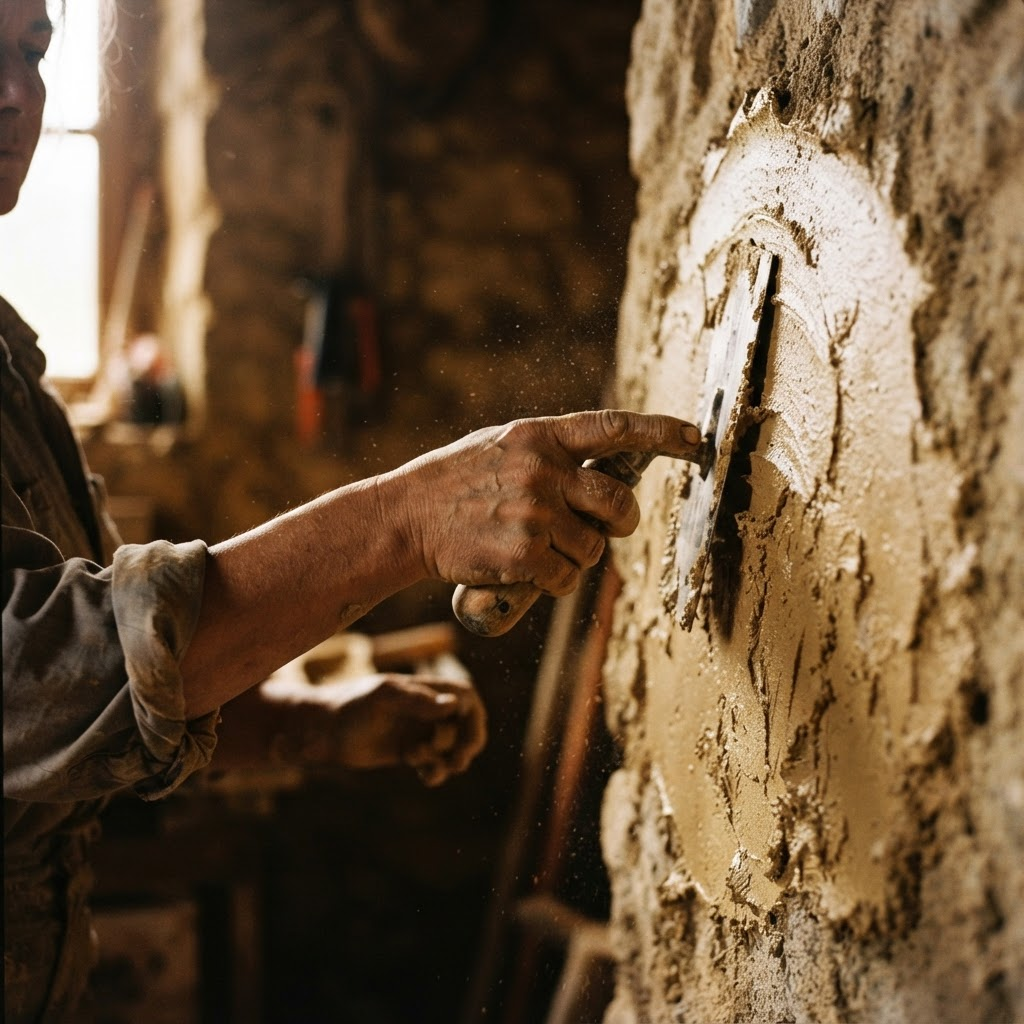
Stone should be heavy, timber should move, brass should darken. We specify materials that age rather than degrade, and we never disguise one as another.
Everything we commission is made by a person we can name. Where a machine produces a better result we use one, but the decision is always deliberate.
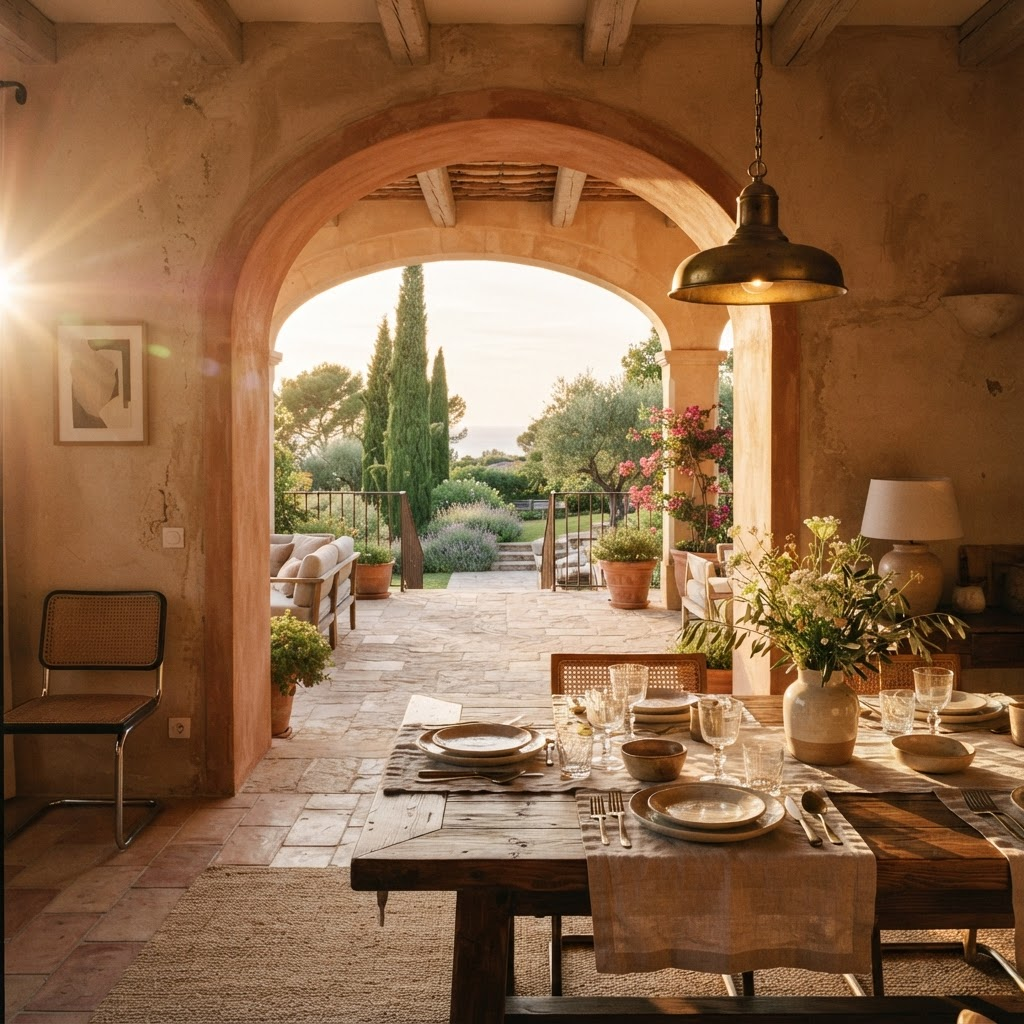
A house in Udaipur and a house in Jaipur should not be the same house in different colours. Place, climate and history set the terms.
Luxury is a question of quality per square metre, not quantity. We would rather deliver four extraordinary rooms than eleven adequate ones.
Daylight is surveyed before a plan is drawn and artificial light is designed before a fabric is chosen. It is the first material, not the last.
Sanjana Tyagi leaves a conservation practice in Delhi and takes a lease on one room above a bookbinder on Hauz Khas Village. The first commission is a two-bedroom flat in South Delhi.
A Grade II listed rectory in Rajasthan. The project runs eleven months over and teaches the studio everything it now knows about conservation programme.
Prashant Tyagi starts collecting samples in a single drawer. It now occupies an entire wall and holds over four thousand references.
A twenty-two room boutique hotel in Bengaluru. The studio learns to design for a ten-year maintenance cycle rather than a photograph.
A second studio near Saket, established primarily to be closer to the workshops of the Rajasthan and the quarries of Rajasthan.
After two years and eleven prototypes, the studio releases its first furniture collection, produced by a workshop of four in the Rajasthan.
A thirty-four month conservation on the Lake Pichola. The studio’s most complex commission and the one that defines its position on restoration.
Eighty-six completed residences across twelve Indian cities, with satellite offices in India, and a network of ninety-one named artisans.
We hire slowly. Every senior member of this studio has spent time with a tool in their hand, and it shows in the drawings.
Founder & Creative Director
Trained as an architect in Delhi and Zurich, Elena founded the studio in 2021 after nine years in heritage conservation. She still draws every principal plan by hand before it reaches a computer.
Delhi — since 2021

Director of Technology
Prashant leads the studio’s technology strategy, overseeing digital systems, software development, and automation. He bridges design and technology, building tools and workflows that streamline operations and enable the studio to work smarter.
Delhi — since 2021
Our material library began in 2014 as a single drawer. It now holds over four thousand references, and every one of them has been handled by someone in this studio before it was filed.
Clients are welcome in it. Most decisions that matter get made standing at that wall, in daylight, with the sample in hand — never from a screen.
Come and see
We keep two afternoons a week for people who are simply curious. No brief required, and nothing is expected of you.
All enquiries are handled in confidence. A significant portion of our work is never published; where discretion is required, we operate under private terms and no imagery leaves the studio.